
Job seekers getting asked for Facebook passwords
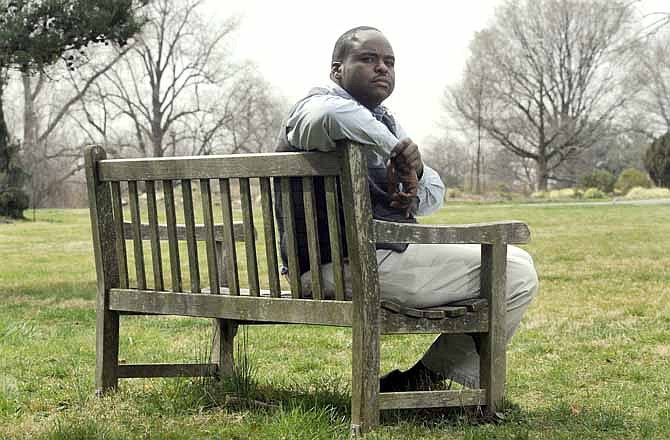
Robert Collins of Baltimore poses for a photo Friday, March 16, 2012 at Cylburn Arboretum in Baltimore. When Collins returned from a leave of absence from his job as a security guard with the Maryland Department of Public Safety and Correctional Services in 2010, he was asked for his Facebook login and password during a reinstatement interview, purportedly so the agency could check for any gang affiliations. Photo by The Associated Press.
Wednesday, March 21, 2012
When Justin Bassett interviewed for a new job, he expected the usual questions about experience and references. So he was astonished when the interviewer asked for something else: his Facebook username and password.
Bassett, a New York City statistician, had just finished answering a few character questions when the interviewer turned to her computer to search for his Facebook page. But she couldn't see his private profile. She turned back and asked him to hand over his login information.
Bassett refused and withdrew his application, saying he didn't want to work for a company that would seek such personal information. But as the job market steadily improves, other job candidates are confronting the same question from prospective employers, and some of them cannot afford to say no.
In their efforts to vet applicants, some companies and government agencies are going beyond merely glancing at a person's social networking profiles and instead asking to log in as the user to have a look around.
"It's akin to requiring someone's house keys," said Orin Kerr, a George Washington University law professor and former federal prosecutor who calls it "an egregious privacy violation."
Questions have been raised about the legality of the practice, which is also the focus of proposed legislation in Illinois and Maryland that would forbid public agencies from asking for access to social networks.
Since the rise of social networking, it has become common for managers to review publically available Facebook profiles, Twitter accounts and other sites to learn more about job candidates. But many users, especially on Facebook, have their profiles set to private, making them available only to selected people or certain networks.
Companies that don't ask for passwords have taken other steps — such as asking applicants to friend human resource managers or to log in to a company computer during an interview. Once employed, some workers have been required to sign non-disparagement agreements that ban them from talking negatively about an employer on social media.
Asking for a candidate's password is more prevalent among public agencies, especially those seeking to fill law enforcement positions such as police officers or 911 dispatchers.
Back in 2010, Robert Collins was returning to his job as a correctional officer at the Maryland Department of Public Safety and Correctional Services after taking a leave following his mother's death. During a reinstatement interview, he was asked for his login and password, purportedly so the agency could check for any gang affiliations. He was stunned by the request but complied.
"I needed my job to feed my family. I had to," he recalled.
After the ACLU complained about the practice, the agency amended its policy, asking instead for job applicants to log in during interviews.
"To me, that's still invasive. I can appreciate the desire to learn more about the applicant, but it's still a violation of people's personal privacy," said Collins, whose case inspired Maryland's legislation.
Until last year, the city of Bozeman, Mont., had a long-standing policy of asking job applicants for passwords to their email addresses, social-networking websites and other online accounts.
And since 2006, the McLean County, Ill., sheriff's office has been one of several Illinois sheriff's departments that ask applicants to sign into social media sites to be screened.
Chief Deputy Rusty Thomas defended the practice, saying applicants have a right to refuse. But no one has ever done so. Thomas said that "speaks well of the people we have apply."
When asked what sort of material would jeopardize job prospects, Thomas said "it depends on the situation" but could include "inappropriate pictures or relationships with people who are underage, illegal behavior."
In Spotsylvania County, Va., the sheriff's department asks applicants to friend background investigators for jobs at the 911 dispatch center and for law enforcement positions.
"In the past, we've talked to friends and neighbors, but a lot of times we found that applicants interact more through social media sites than they do with real friends," said Capt. Mike Harvey. "Their virtual friends will know more about them than a person living 30 yards away from them."
Harvey said investigators look for any "derogatory" behavior that could damage the agency's reputation.
E. Chandlee Bryan, a career coach and co-author of the book "The Twitter Job Search Guide," said job seekers should always be aware of what's on their social media sites and assume someone is going to look at it.
Bryan said she is troubled by companies asking for logins, but she feels it's not a violation if an employer asks to see a Facebook profile through a friend request. And she's not troubled by non-disparagement agreements.
"I think that when you work for a company, they are essentially supporting you in exchange for your work. I think if you're dissatisfied, you should go to them and not on a social media site," she said.
More companies are also using third-party applications to scour Facebook profiles, Bryan said. One app called BeKnown can sometimes access personal profiles, short of wall messages, if a job seeker allows it.
Sears is one of the companies using apps. An applicant has the option of logging into the Sears job site through Facebook by allowing a third-party application to draw information from the profile, such as friend lists.
Sears Holdings Inc. spokeswoman Kim Freely said using a Facebook profile to apply allows Sears to be updated on the applicant's work history.
The company assumes "that people keep their social profiles updated to the minute, which allows us to consider them for other jobs in the future or for ones that they may not realize are available currently," she said.
Facebook declined to comment except for issuing a brief statement declaring that the site forbids "anyone from soliciting the login information or accessing an account belonging to someone else."
Giving out Facebook login information also violates the social network's terms of service. But those terms have questionable legal weight, and experts say the legality of asking for such information remains murky.
The Department of Justice regards it as a federal crime to enter a social networking site in violation of the terms of service, but during recent congressional testimony, the agency said such violations would not be prosecuted.
Lori Andrews, a law professor at IIT Chicago-Kent College of Law specializing in Internet privacy, is concerned about the pressure placed on applicants, even if they voluntarily provide access to social sites.
"Volunteering is coercion if you need a job," Andrews said.
Twitter did not respond to repeated requests for comment.
In New York, Bassett considered himself lucky that he was able to turn down the consulting gig at a lobbying firm.
"I think asking for account login credentials is regressive," he said. "If you need to put food on the table for your three kids, you can't afford to stand up for your belief."
McFarland reported from Springfield, Ill.


Comments
mia 1 year, 2 months ago
I think its a terrific idea. Once you sign up for facebook, you give up your rights to privacy. The job market is so bad now, no one wants to hire people that make the company look bad. I know of a person that posted absolute trash on their facebook and works for a local well known company. Use your heads people, keep it clean.
tonto_goldberg 1 year, 2 months ago
Terrific; sure, and I have a few more great ideas to make yourself irresistable to potential employers.
Let us put video cameras in every room of your house, and outside as well - we need to be really sure you're not up to anything that could be detrimental to the company.
Bring all your neighbors and friends along for interviews - one or two or three references aren't enough.
Medical and dental and psychiatric records back to your birth - we want to be sure we are hiring healthy people.
Strip and body-cavity searches - we never know what people might be hiding.
John 1 year, 2 months ago
This is just crazy!
No, you do NOT give up your rights to privacy.
tonto_goldberg 1 year, 2 months ago
I agree, and you can close down your Facebook account.
lovemykids 1 year, 2 months ago
This kind of stuff makes me glad I don't have a FB account anymore. I really don't miss it. After someone pointed out that I was the product and not the customer, I now look at FB differently. I don't like feeling like a cash cow.
Sequoia 1 year, 2 months ago
If the company is really that concerned about what you have on Facebook (why would they be concerned about information/pictures that people can only get with a password?) they can have the applicant log in on a computer during the interview.
Of course, you should never put anything on the internet you wouldn't want everyone to see.
However, there is no reason why you should give ANY of your passwords to anyone.
3DMom 1 year, 2 months ago
There's no reason for them to see anything that's on my FB page that isn't made public already. We have privacy settings for a reason. I would NOT log in during an interview. What I have password protected is absolutely none of their business. That is just the same as asking me for my home security code - not gonna happen. This is a blatant invasion of privacy and hopefully the HR laws will catch up to the technology very soon.
him 1 year, 2 months ago
I know of a person that worked for the state and had a bad day at work and went home and bad mouthed their co-workers on facebook. This person was later fired for doing so. That is not right. Facebook is a personal social network. If someone wants to talk about their job to their friends on that site, they should be able to without having to worry about their employer seeing it and doing something about it.
Sequoia 1 year, 2 months ago
There's nothing "personal" about Facebook. The whole reason Facebook exists is to sell information about your preferences to advertisers. If you post something on Facebook, it is public, not private.
Remember, if you are using a FREE service, then you're NOT the customer. You're the product.
tonto_goldberg 1 year, 2 months ago
I had different words (sucker, revenue source) in mind, but Iagree.
viktorkowski 1 year, 2 months ago
It is private in that there are privacy settings to restrict everything you want to just your friends. Should a employer be allowed to come to your home and look in your cupboards? The reason this is being allowed is because the people in congress now, for the most part, are technologically deficient and havn't a clue. we terminated a HR person last year for doing something similiar.
Sequoia 1 year, 2 months ago
Yes, but restricting items to "just your friends" does NOT prevent those items from being accessed by Facebook and sold to advertisers.
You can restrict other Facebook users, but not Facebook Co., from seeing the content. Facebook Co. sees everything you put on Facebook (incidentally, I believe Facebook ALSO tracks other web pages you visit... even if Facebook is closed).
NOTHING you do or put on the internet is "private." Kids and adults alike need to understand this.
JCLifer 1 year, 2 months ago
In a few years there will be plenty of drones flying around with video cameras monitoring our every move. There ain't nothining private anymore.
bluesfan13 1 year, 2 months ago
So if they verbally badmouthed their employer, and the employer found out, is it ok to fire them then? If not, why? If you badmouth your employer, in any format, that IS grounds for termination if they find out. Period.
viktorkowski 1 year, 2 months ago
my take on it is that what they really want to do is skirt the federal and state laws meant to keep prospective employers from asking questions that don't pertain to the job they are hiring for. you know them as race, gender, religion, marital status, age, disabilities, ethnic background, country of origin, sexual preferences or age. If they can get into your profile they can find that out without asking. questions that get asked alot by un-educated hr people
Sequoia 1 year, 2 months ago
In Missouri, private employers can fire anyone at any time, for any reason, unless there is an employment contract. The term for this is "employment at will." Employers do not need "grounds" to fire anyone.
Yosef 1 year, 2 months ago
Any inappropriate question on a job interview—password or pregnancy—is the stress interview personified. You are deliberately put on the spot with a difficult question, and how you handle it shows how professional you are.
“Password? Accounts require members to agree to ‘Keep your password confidential,’ and I keep my promises. Likewise, just as you may want me to keep your trade secrets and have some non-compete clauses that you ask of me, I will be honoring those commitments to you. I am sure you can appreciate that my word is my bond.”
Sequoia 1 year, 2 months ago
An employer asking an employee if she is, or plans to become, pregnant is violation of law, I think.
Yosef 1 year, 2 months ago
Yes, an inappropriate question can also be against the law to ask, and having the grace to reply without ending the interview is a sign of personal and professional skill.
lovemykids 1 year, 2 months ago
Where as the employers lack of ethics in even asking to begin with might make that person not want to work for you.
Yosef 1 year, 2 months ago
If I were the interviewer, I would never ask password or pregnancy questions. Rude or unlawful questions are awful to ask and awful to deal with, no argument there.
As job candidate, my goal is how do I handle the question and get the job offer. I certainly may rethink wanting the job later, but not during the interview, when I stay focused on making a good impression despite it all.
John 1 year, 2 months ago
Actually it is not. That question may be asked and they can also ask your age. What they absolutely MAY NOT DO is discriminate because of the answer. That is why so many places simply do not ask, it isn't worth the arguing later on.
billbrasky 1 year, 2 months ago
Ah the beauty of free markets at work. No one forced you to submit an application to a job that requires a Facebook review. Sure times are hard and jobs are few and far between. But, if employers were having a hard time finding qualified employees who would consent to a Facebook review they would certainly stop requiring the reviews. As long as the demand for jobs exceeds the supply it shouldn't be a surprise to anyone that employers will do whatever they deem necessary to find suitable applicants.
Personally I think it is a little creepy that at your job interview you and your interviewer, most likely a stranger, would sit together and look over your online life. I'm sure I would feel like my privacy was invaded, but I have to remember I need a job and I better "play ball."
No doubt in industries were qualified applicants run thin I doubt this is a common practice.
billbrasky 1 year, 2 months ago
Edit: As long as the demand by job seekers is greater than supply of jobs from employers...
Sequoia 1 year, 2 months ago
Some states are beginning to pass laws prohibiting employers from discriminating against interviewees who refuse to divulge their Facebook passwords.
viktorkowski 1 year, 2 months ago
I would never do this. if someone would ask me this I would ask for their passwords as well. you can never know a company well enough. are they hiding secrets? is the company about to tank? if you are to give up yours they should do the same. If the employer refuses get up and walk out.
billbrasky 1 year, 2 months ago
It can't be too long before Facebook begins to lose popularity among the younger generations of social media users. For example, by the time I have teenage kids how could it possibly be cool for them to be using the same social media sites that their parents and grandparents use? Now and certainly gaining popularity among employers, higher education, athletic programs, and high security government jobs who monitor online media, it is becoming much more important for individuals to be politically correct and reasonable with what they share on sites such as Facebook.
It looks like the degree of professionalism which was previously only associated with your LinkedIN account is now becoming the standard for Facebook as well.
Could this be the start of sending part of social media underground?
JCLifer 1 year, 2 months ago
Yeah, and there will never be a day when a computer needs more than 640 kb of memory too. LMAO!!
viktorkowski 1 year, 2 months ago
my kid migrated to twitter to escape his parental. he said his friends do the same. fine with me he routinely raped my wall with farmville. btw check out "Raspberry Pi" on youtube.
spelchek 1 year, 2 months ago
I'd ask the interviewer, "Are you my 'friend'?"...there's your answer.
Please review our Policies and Procedures before registering or commenting
Or login with:
OpenID