
ST. JAMES, MO. (AP) - The text was about something innocuous: A request to go to the county fair. It set off a highway pileup that took two lives, injured dozens and left two school buses and a pickup truck in a crumpled heap.
As the nation debates a federal recommendation to eliminate cellphone use in cars, the high school band students from St. James who were involved in the wreck last year have already done it themselves. After losing one of their classmates, many of the teens made a vow: Using a cellphone behind the wheel is something they just won't do.
The young man who was on the other end of the pivotal text exchange, who says he didn't know his friend was driving, is still haunted by the catastrophic result of what began as a simple message about their plans.
"I pretty much feel like it was my fault," said the young man, who spoke to The Associated Press on condition that his name not be used because he fears retaliation from people who might blame him.
He was texting with 19-year-old Daniel Schatz, who investigators say set off the accident by slamming into the back of a semi cab that had slowed for road construction. The buses then crashed into the wreckage. Schatz and a 15-year-old girl on one of the buses, Jessica Brinker, were killed instantly.
The National Transportation Safety Board has cited that accident in its push to ban drivers from using cellphones - even hands-free devices. That recommendation has already met with resistance from lawmakers around the country who fear an unprecedented reach into people's driving habits.
But young people in St. James, a sleepy town of about 3,700 near the Mark Twain National Forest, have already changed their behavior.
"The majority of us will refuse to text and drive because of this," said Ian Vannatta, 16, who was on one of the buses and is a new driver. "It's the difference between life and death."
Emily Perona, now an 18-year-old senior, survived the bus crash with a broken pelvis despite sitting just one seat ahead of Brinker.
"If a text or a call is that important, it should be no problem pulling over to the side of the road and then take care of what you need to," Perona said. "No life is worth texting your friend or anybody back while you're behind the wheel."
The events of Aug. 5, 2010 - spelled out in a chilling Missouri State Highway Patrol report - convinced her of that.
Vannatta and Perona were among about 50 St. James band students piled onto separate buses - one for boys, the other for girls - on their yearly pilgrimage to Six Flags St. Louis.
Conditions were clear, though several stretches along the freeway were under repair. The buses made their way through two work zones before rolling up to a third at Gray Summit, about 40 miles southwest of St. Louis.
Michael Crabtree, a 43-year-old trucker bound for St. Louis for a load, had just gotten onto Interstate 44 driving a semi cab without a trailer. Near Gray Summit, along a straight, uphill ribbon of highway, he slowed for road work when he saw in his rearview mirror a silver pickup barreling down on him. He braced for impact.
The 2007 GMC driven by Schatz - a former University of Missouri reserve quarterback and a Republican state lawmaker's son from nearby Sullivan - hit Crabtree's cab at 55 mph.
Tour bus driver Eugene Reed saw the wreck from behind, pulled over and scrambled out to warn other approaching drivers. That's when both of the St. James buses rolled by.
The lead bus driver told investigators she straddled the eastbound lanes' center line to get around the tour bus. She glanced in the mirror to see what Reed was doing when her bus, carrying the girls in the band, rammed the pickup truck from behind.
Perona recalls everything just shaking, then thinking, "God, help me." In a confused haze, she peered out the left window and saw the bus had tilted skyward.
"It's almost like I blacked out," she remembers. "Then all of a sudden, I was struck."
The second St. James bus had just crashed into the pileup with such force that its front cab broke through the back of the first and into the very back seat, where Brinker sat directly behind Perona.
"I waited, and I prayed," Perona said.
The violent impact sent the first bus up onto the pickup truck, crushing it, and even atop the semi cab, where the bus came to rest pointed up, almost like a rocket ready to launch.
On the second bus, Vannatta recalls the impact as merely a blur.
"All I remember is seeing the glass shatter, hitting the seat and hearing screaming," he said of the collision that sent him lurching into the seat ahead of him, leaving him with a compression spinal fracture that damaged four of his vertebrae.
Vannatta remembers sitting along the roadside, where a hasty triage was unfolding: The unhurt in one group, those with minor injuries in another. "Those majorly hurt were shipped off as fast as they could," the teenager said.
While both school bus drivers were charged with careless driving, their cases have not yet gone to court.
In the end, it was Schatz's texting that caused the wreck, the patrol and the NTSB determined.
The friend with whom Schatz was texting had known him since childhood. Their exchange that morning was about plans to spend the day at a county fair, the friend told AP. He said he thought Schatz was at work.
Phone records obtained by the Highway Patrol showed that the friend first texted Schatz at 9:58 a.m. An exchange of 10 other texts followed. When the friend sent a final text at 10:09 a.m., Schatz never replied.
"I just figured he got busy," said the young man. He learned later his friend died at about that moment.
Perona waved away any blame for the wreck.
"Everyone makes mistakes," said Perona, who has rebounded from the broken hip and a damaged nerve that until last August left her with a dragging foot, forcing her to drop out of band her senior year as a clarinet player because she couldn't march. "You just need to learn from them."
Trumpet-playing Vannatta, who before the tragedy had never been in a wreck, has taken caution to another level. He puts the phone away when behind the wheel - no exceptions. And he avoids the freeway in his Ford F-150 pickup, taking an outer road to his warehouse job some 15 minutes from home.
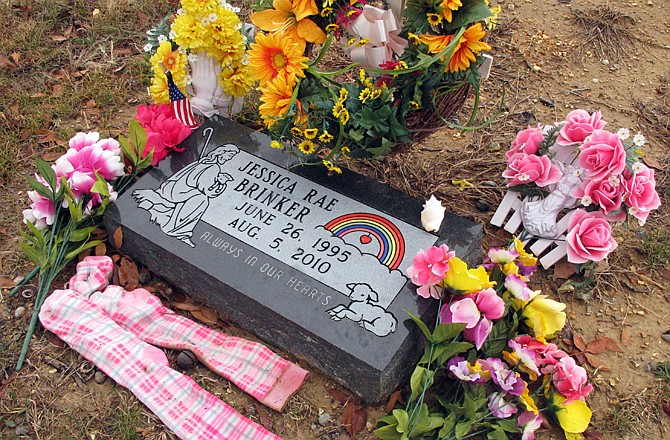
Around St. James, the NTSB's call for a total ban on behind-the-wheel cellphone use has blunted the community's efforts to move on from losing a girl whose burial plot includes plaid pink socks - homage to Brinker's always-colorful attire that friends say matched her cheery character.
"I still go to her grave on occasion, where I pray and talk to her," Vannatta said. The tragedy "is something that will stay with this community for a very, very long time. It's going to and has changed all of our lives."